

Application Case: Plastic Pipes
Project Background
During the construction of a production base for a plastic piping enterprise focused on manufacturing home-decoration PPR pipes—primarily utilizing PP polypropylene as raw material processed via extrusion at a designed daily capacity of approximately 200 tons—the strategic shift from the labor-intensive manual feeding methods employed at the old facility (which suffered from low efficiency, high costs, and difficult process control) to a new production model centered on automation, intelligence, and digitalization necessitated the introduction of advanced automatic bag-opening robots as a critical component of the project.
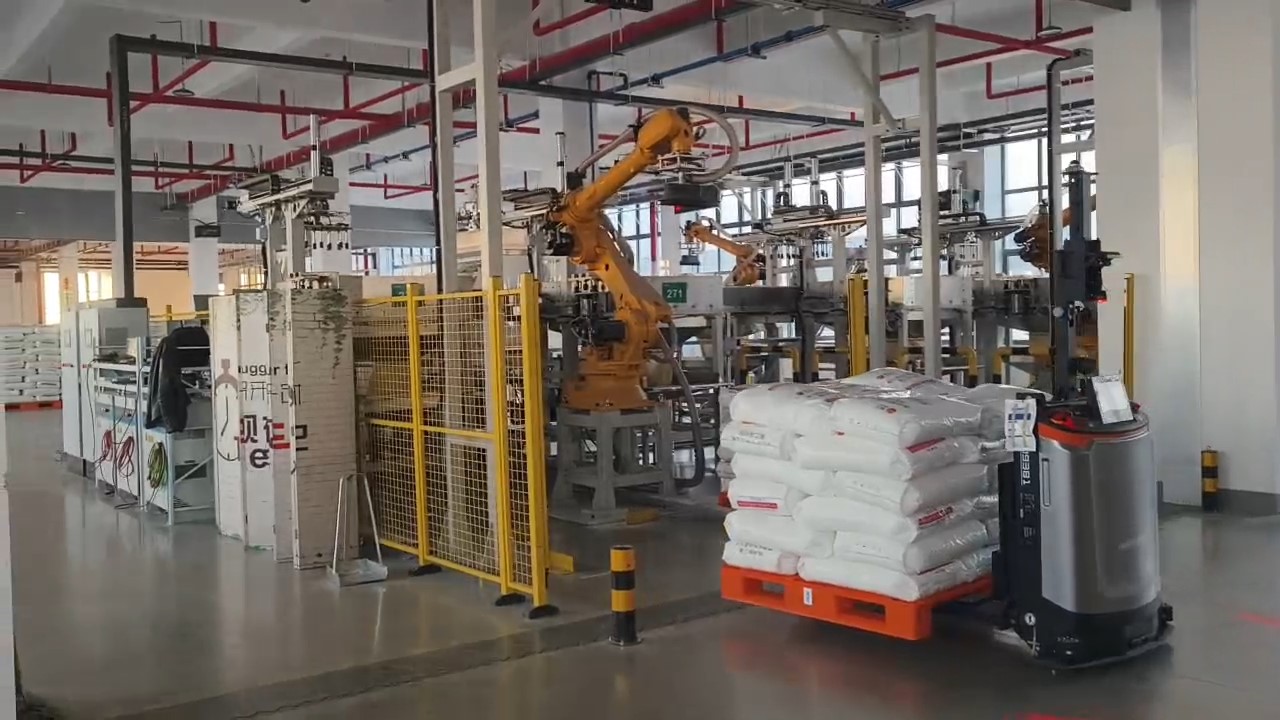
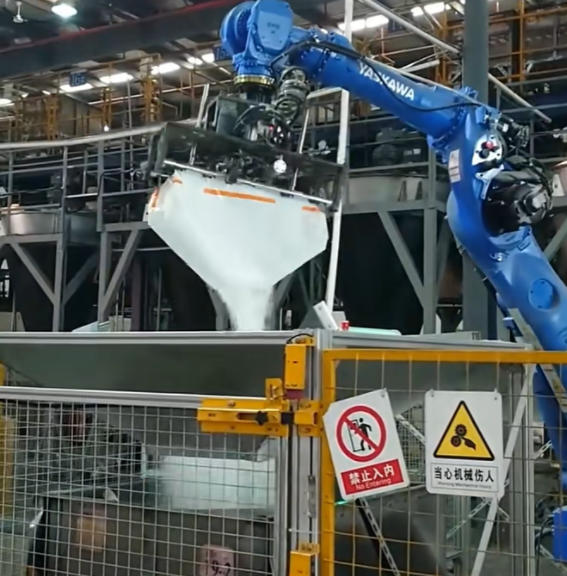
However, implementation faced significant technical challenges: as a brand-new production base designed from scratch, the feeding system could not operate in isolation; instead, it had to function as an organic component fully integrated with the front-end unmanned forklift scheduling system, the inbound logistics rhythm of the automated warehouse, and the back-end centralized feeding system linked to silo level monitoring. Crucially, ensuring seamless cross-device data link communication and establishing a closed-loop control system for both logistics and information flow placed extremely high demands on overall design coordination.
Addressing these challenges, the project ultimately adopted Hanchine's standard solution—the Max Series bag-opening robots—implementing a multi-unit parallel configuration featuring a "double-stack, double-hopper" design with a total of four units deployed within the workstation. Through deep system integration and data interface development, these four units successfully achieved seamless data connectivity and real-time interaction with both the front-end unmanned forklift call systems and the back-end material conveying systems, thereby constructing a fully visualized, controllable, and traceable intelligent feeding system that perfectly fulfills the top-level design objectives of smart manufacturing for the new base.
Challenges
Complex System Integration
As a newly planned base, the feeding system could not operate in isolation; it required deep coordination with the front-end unmanned forklift scheduling, automated warehouse logistics, and the back-end centralized feeding system.
High Demands for Data & Control
Achieving seamless cross-device data link communication and ensuring a closed-loop control system for both logistics and information flow placed extremely high demands on overall design coordination.
Solution
Core Equipment
Adoption Max Series De-palletizing Robots.
Deployment Architecture
Implementation of a "Double-Stack, Double-Hopper" parallel design with a total of 4 units deployed within the workstation.
Technical Execution
Utilizing deep system integration and data interface development to bridge data gaps between front-end calling systems and back-end conveying systems, achieving seamless data connectivity and real-time interaction.
Application Value
Intelligent System Established
Successfully constructed an intelligent feeding system featuring full-process visualization, controllability, and traceability.
Strategic Goals Achieved
Perfectly realized the new base's top-level design objectives centered on automation, intelligence, and digitalization, effectively resolving the inefficiencies and high costs associated with manual feeding.
rOI
Doubled Efficiency
Robotic high‑speed bag opening with stable cycle time and significant capacity increase.
Labor Reduction
Cuts 2–3 operators per line, reducing labor costs by ~60%.
Near‑Zero Residuals
High‑precision feeding minimizes leftover material and maximizes raw material utilization.